Geotechnical Engineering
DUBLIN
HomeExcavationsAnálisis geotécnico para túneles en suelo blando

Soft Ground Tunnel Analysis in Dublin: Boulder Clay, Groundwater and Urban Risk

Site investigations you can build on.

LEARN MORE

Dublin’s geology is not uniform. You hit limestone gravel in one borehole and stiff boulder clay in the next. Last year we worked on a stormwater tunnel alignment near the Grand Canal where the contractor lost ground twice—not because of poor equipment, but because the transition between alluvium and glacial till had not been properly mapped. Tunnelling in Dublin means dealing with highly variable Quaternary deposits. The boulder clay itself can be dense and overconsolidated, but it often contains lenses of water-bearing sand and silt. A tunnel boring machine (TBM) that operates well in clay will struggle when it encounters a sudden change to granular material. We approach each project by building a detailed ground model from targeted site investigation. This data feeds directly into tunnel stability assessments, face pressure calculations, and settlement predictions. For Dublin Port tunnel conditions, the combination of soft-ground-tunnels analysis with in-situ permeability testing proves essential to avoid surface settlement in Docklands reclaimed land.

Dublin’s boulder clay is not homogeneous. Each lens of sand or silt inside the till mass represents a potential face instability that must be quantified before TBM launch.
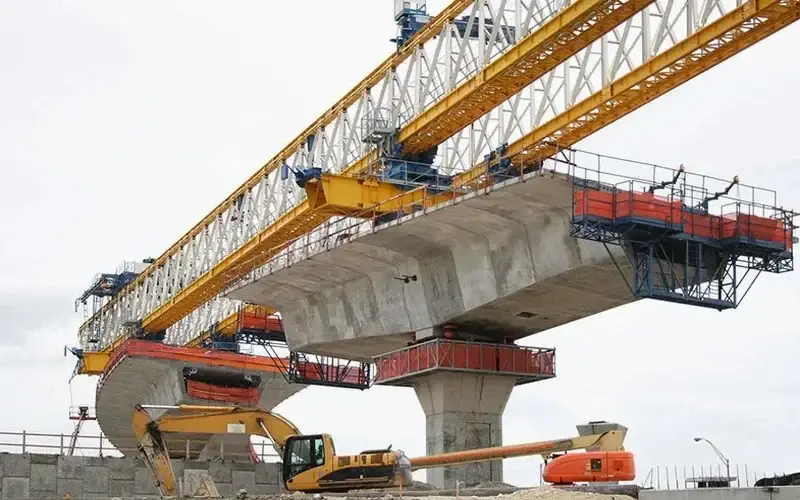
Process overview

Dublin’s maritime climate means groundwater levels stay high year-round. Rainfall averages 758 mm annually, and the Liffey’s tidal influence extends several kilometres upstream. In a saturated boulder clay matrix, undrained conditions often govern short-term tunnel stability. We run consolidated-undrained triaxial tests on Shelby tube samples extracted from the tunnel horizon. The effective stress parameters from these tests let us model long-term consolidation settlements that affect nearby Georgian buildings. Our laboratory holds ISO 17025 accreditation for advanced soil testing. Standard penetration tests alone cannot characterise Dublin’s glacial till properly; we supplement them with pressuremeter tests in boreholes to obtain in-situ stiffness values. These stiffness parameters feed directly into 2D and 3D finite element models. When the tunnel alignment crosses beneath the Luas Red Line or existing Victorian brick sewers, we run separate serviceability limit state checks using the small-strain stiffness from bender element tests. The result is a ground movement prediction accurate enough to satisfy Dublin City Council’s strict building protection requirements.
Soft Ground Tunnel Analysis in Dublin: Boulder Clay, Groundwater and Urban Risk
Technical reference — Dublin

Local context

Dublin’s medieval street pattern left a legacy of narrow lanes, undocumented basements, and buried timber foundations. The city expanded rapidly in the 18th and 19th centuries, often filling in old watercourses like the River Poddle and the Steyne. Today those palaeochannels sit hidden beneath the central business district, filled with soft organic silts and saturated debris. A tunnel boring machine crossing such a feature without prior detection can suffer face collapse within minutes. We have mapped several of these buried channels using cone penetration testing combined with electrical resistivity tomography. The data reveals sharp contrasts between natural boulder clay and man-made fill. Settlement risk is highest where the tunnel alignment runs directly beneath Georgian terraces with shallow strip footings. In these sections we prescribe compensation grouting arrays installed from street level before TBM passage. Each array is designed to inject low-viscosity cement grout in controlled stages, lifting the foundation by millimetres as the tunnel advances below. Dublin’s historic core demands this level of precision. There is no room for settlement surprises when you are tunnelling under Trinity College or Christ Church Cathedral.

Need a geotechnical assessment?

Reply within 24h.

Email: [email protected]

Reference standards


EN 1997-1:2004 (Eurocode 7 – Geotechnical design) + Irish National Annex, EN 1997-2:2007 (Ground investigation and testing), IS EN ISO 22475-1:2006 (Sampling and groundwater measurement), IS EN ISO 17892 series (Laboratory testing of soil), IS EN ISO 22476 series (Field testing – CPT, PMT), NSAI Technical Recommendation for Tunnelling in Urban Areas (2020)

Technical data

ParameterTypical value
Undrained shear strength (boulder clay)Su = 60 – 250 kPa (depth-dependent)
Effective friction angle (glacial till)φ’ = 27° – 35°
Permeability (alluvial sands)k = 1×10⁻⁵ – 1×10⁻³ m/s
Groundwater table depth0.5 – 3.0 m below ground level
TBM face pressure range (Dublin Docklands)1.2 – 2.8 bar
Typical overconsolidation ratio (OCR)8 – 25 in upper till
Applicable design standardEN 1997-1:2004 + Irish National Annex

Common questions


What is the typical cost range for a geotechnical analysis for a soft soil tunnel in Dublin?

For a tunnel alignment study in Dublin’s urban area, the geotechnical analysis typically falls between €4,170 and €14,070 depending on alignment length, number of boreholes, and laboratory testing scope. A short pedestrian tunnel requires less investment than a multi-kilometre sewer or metro alignment with complex settlement analysis.

How do you handle the transition between boulder clay and alluvial deposits during TBM advance?

We map the transition using a combination of CPTu soundings spaced at 10–20 metre intervals. The pore pressure dissipation data from CPTu tells us exactly where granular layers sit within the clay matrix. This information feeds into the TBM control room so the operator can adjust face pressure and conditioning foam injection before entering the mixed-face zone.

What laboratory tests are critical for Dublin’s glacial till when designing a tunnel?

Consolidated-undrained triaxial tests with pore pressure measurement are essential to establish effective stress parameters. Oedometer tests on high-quality samples give us the compression and swelling indices needed for settlement prediction. Particle size analysis on the sand and gravel lenses determines the risk of fines migration at the TBM cutterhead.

What Dublin-specific regulations apply to tunnelling beneath protected Georgian buildings?

Dublin City Council requires a detailed building condition survey and a settlement prediction report prepared to Eurocode 7 serviceability limit states. The Irish National Annex sets stricter rotation limits for masonry structures than the general Eurocode values. We coordinate with conservation architects and submit monitoring plans that specify real-time levelling and tiltmeter arrays on all protected structures within the settlement influence zone.

Location and service area

We serve projects across Dublin and surrounding areas.

View larger map